

Why Solana Explorers Like Solscan Matter More Than You Think
Whoa! I opened an explorer the other day and my first reaction was just how fast it felt. It loads quickly and gives granular data without fluff. Initially I thought explorers were all the same, but then I dug into transaction traces, token mint history, and validator telemetry and realized there’s real variance between tools. That variance matters when you’re tracking token flows or debugging a program.
Seriously? Yes — Solscan and other explorers surface different defaults and filters. Some show token holders upfront, others bury that data behind extra clicks. On one hand, minimal interfaces keep things clean for new users, though actually when you’re deep into token forensic work those same minimal choices force you to use APIs or CLI tools to get what you need. My instinct said to compare features side-by-side, so I did.
Here’s the thing. If you use Solana a lot, a good explorer is like a Swiss Army knife. You want a balance of speed, data depth, and helpful visualizations. I started with transaction lookups, then moved to token trackers, NFT metadata inspection, and staking flows, and across each task the explorer’s performance and UX either saved me an hour or added confusion that ate into dev time. That difference shows up in how they handle token decimals, wrapped SOL, and rent exemptions.
Wow! Token tracker features are central for traders and developers both. Solscan provides token holder lists, rich token pages, and transfer histories. Because Solana’s token programs have evolved, some explorers display lineage information — like original mint authority and freeze status — while others simply list current holders and balances, which makes audits either straightforward or frustrating depending on your needs. I like seeing the mint authority when I’m checking for rug risk.
Hmm… One part bugs me though, and that’s inconsistent labeling of wrapped tokens across explorers. For instance, wSOL often appears without clear wrapping metadata, so balances look off. Actually, wait—let me rephrase that: it’s not just wrapping, it’s how explorers reconcile token accounts, owner associations, and program-derived addresses when presenting a clean holder list, and that reconciliation can hide dust accounts or show inflated active user counts. That can skew analytics, especially for projects relying on simple holder counts for airdrops.
Okay, so check this out— I pulled the same token on Solscan and a rival explorer to compare. Transactions matched, but holder counts differed by hundreds, and that surprised me. Digging deeper, I found one explorer aggregated token accounts differently and filtered some zero-lamport accounts, while the other showed raw token accounts without filters, and that choice, which seems small, changes how you interpret on-chain activity. That’s when I realized explorers are making editorial decisions about data presentation.
I’m biased, but as a developer I favor transparency and easy data export for offline analysis. Solscan offers CSV exports and an API for deeper queries. API limits and rate throttles matter though, because if your app needs to fetch holder history for thousands of addresses, an explorer’s API policy becomes a practical bottleneck, and sometimes you must run your own RPC node to keep up. So think of explorers as useful layers on top of RPC nodes, not replacements.
Wow! The UI layout and visual cues noticeably influence whether I trust the data at a glance. Clear labeling, timestamps, and links to raw transactions help. If an explorer shows derived account relationships, program logs, and stack traces for failed transactions, it makes debugging programs on Solana practically feasible for more developers, whereas a sparse UI forces you to stitch together data from multiple sources. Solscan leans into diagnostics while trying not to overwhelm newcomers with noise.
Really? I’m often surprised by how many users ignore logs. Program logs often reveal why a transfer failed or why state didn’t update. Tracing a cross-program invocation on Solana sometimes requires following inner instructions across multiple transactions and programs, and an explorer that surfaces those inner instructions with contextual links saves huge amounts of guesswork. That capability is a key factor that separates hobbyist tools from professional-grade explorers for serious users.
I’ll be honest… there are privacy considerations when explorers expose account relationships and token movements publicly. On Solana, token accounts are public by design, but how explorers aggregate and present them can amplify privacy signals. Some users expect obfuscation and are surprised that wallets, when clustered, reveal behavioral patterns across DEX trades, staking events, and NFT mints, which leads to debates around whether explorers should add optional anonymization layers or keep raw transparency for auditors. On one hand, transparency aids security; though actually, too much linkage can invade privacy for casual users.
During a hackathon in the Bay Area I watched a team wreck an afternoon because they misread holder counts; somethin‘ was off and they blamed the token contract, not the explorer. That stuck with me. (oh, and by the way…) I told them to cross-check on a second explorer and export the raw token account list; the mismatch went away once they filtered PDAs and wrapped accounts. My takeaway: always validate before you panic.
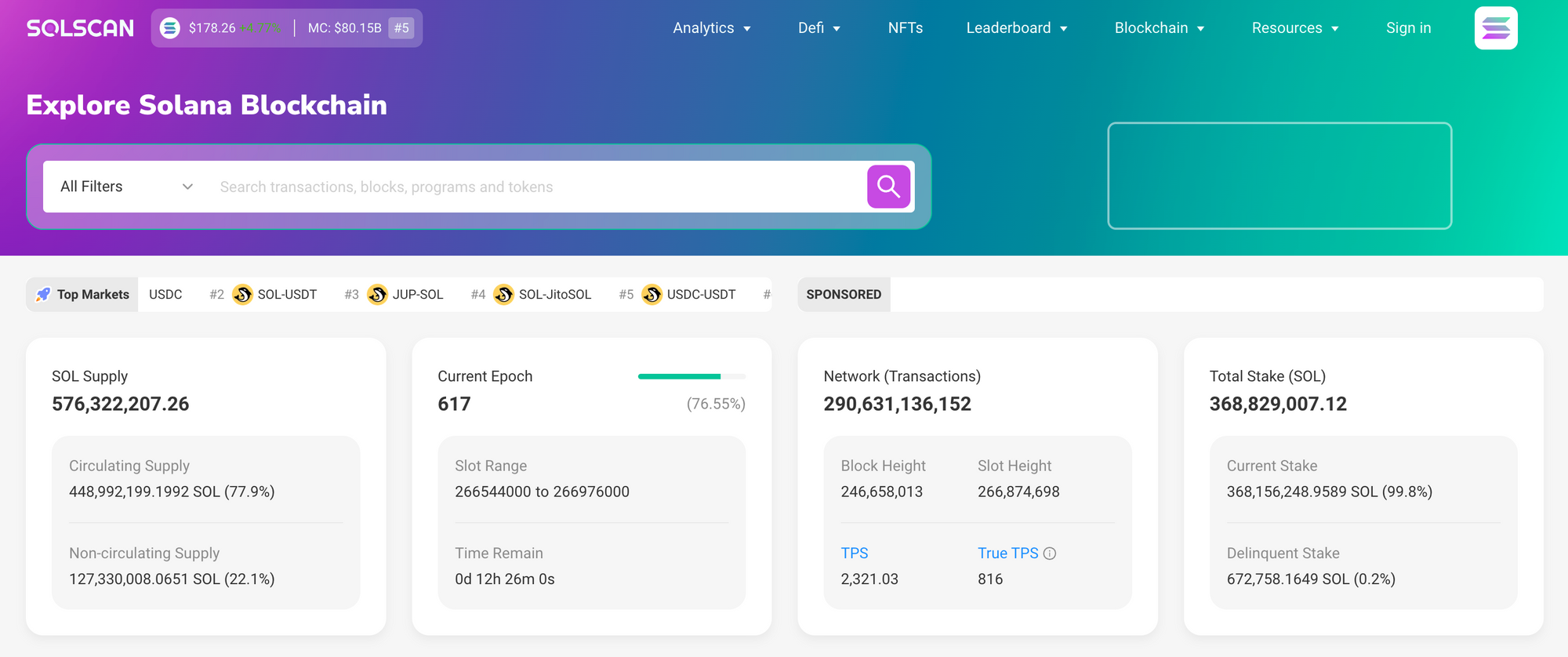
Where Solscan Fits In
Solscan is one of those explorers that aims to strike a balance — fast rendering, token trackers, and exportable data without too many hoops. For a hands-on user, that mix is very very important. I’m not 100% sure it fits every workflow (no tool ever does), but it covers the common cases well and surfaces advanced diagnostics when you need them. If you want to check it out, try this link: https://sites.google.com/cryptowalletextensionus.com/solscan-explorer-official-site/
Practically speaking, here’s how I decide which explorer to use: if I need a quick lookup I pick the fastest UI; if I’m auditing token flows I use the one with the clearest holder lineage and export options; if I’m debugging programs I pick the tool that surfaces inner instructions and logs. There is tradeoff between simplicity for new users and depth for power users, and different explorers choose different spots along that spectrum. Your choice should match your job — analyst, trader, auditor, or dev.
Some tangents — like how Solana’s fee model and parallel runtime affect how explorers index data — are nerdy but relevant. Explorers must keep up with transaction parallelization, account change streams, and slot reorganizations, and those backend challenges determine how fresh and consistent the web UI feels. If you’ve ever refreshed a page and seen inconsistent state, that’s often an indexing lag, not a broken contract.
FAQ
How accurate are token holder counts across explorers?
They’re usually accurate for on-chain balances, but presentation choices (filtering zero-lamport token accounts, aggregating PDAs, handling wrapped tokens) cause divergences. Export raw token account data and reconcile if you need authoritative counts. Also, watch for dust accounts and staking-associated accounts that can inflate perceived active user numbers.